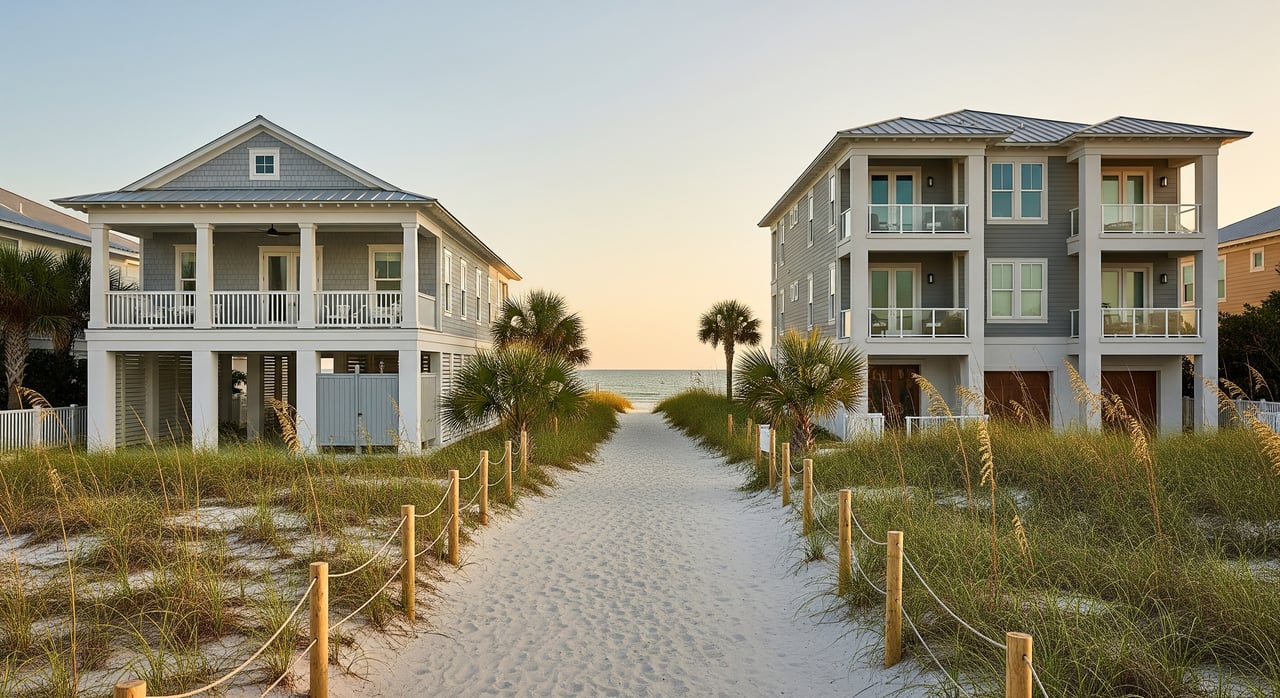
Beach Single-Family vs. Townhome: What Fits Your Life?
January 1, 2026
January 1, 2026
You want the beach lifestyle without the hassle, but which home type fits you best: a single-family house by the sand or a townhome near the Gulf? The right choice often comes down to how much maintenance you want, how you plan to use outdoor space, and what you need from an HOA. This guide breaks down the trade-offs specific to Redington Beach so you can compare costs, responsibilities, and lifestyle with clarity. Let’s dive in.
In a typical single-family purchase, you own the land and the structure. You control the exterior and interior, which also means you handle roof, paint, yard, and any private docks or seawalls. Fees can be lower if there is no HOA or if the HOA maintains only limited common areas.
In Florida, “townhome” can mean different legal structures. Some are fee simple with an HOA, where you own the unit and land parcel but share rules and amenities. Others are condominium townhomes, where the association owns the exterior and land while you own the interior. Always confirm the exact legal structure before you compare costs.
HOAs and condo associations typically maintain common areas like landscaping, walkways, and shared amenities. Condominium associations often handle exterior painting and roof replacement for the building. They also insure common elements and sometimes certain building components. Fee inclusions vary, so request the association budget, reserve details, and insurance declarations to know what you are paying for.
Attached homes near the beach often carry monthly or quarterly fees. These commonly cover landscaping, irrigation, exterior maintenance, roof reserves for condos, trash, some utilities, and amenity upkeep. Single-family HOAs tend to be lower if there are fewer shared elements. The only way to compare apples to apples is to review what the fee actually includes.
Coastal properties often need wind coverage and flood insurance. If the home sits in a FEMA Special Flood Hazard Area and you use a federally backed mortgage, flood insurance is required. Even if not required, it is smart to review flood risk, elevation certificates, and recent premium quotes before you buy.
With a single-family home, you budget for lawn care, irrigation, exterior paint, roof upkeep, driveways, and any fencing. Townhomes and condos shift many of those tasks to the association, which can make life simpler, but assessments and reserves fund that work.
Salt air accelerates wear. Expect more frequent exterior paint, deck replacement, and HVAC corrosion prevention. If there is a seawall or bulkhead, plan for inspections and potential repairs. Pest and termite treatments are common recurring costs in Florida.
Condominium associations usually carry a master policy for common elements and building structure. Unit owners typically purchase an HO-6 policy for interiors and personal property, plus loss assessments if needed. Townhome policies vary by association rules, so confirm whether the exterior is insured by you or the HOA.
Flood zones matter. Check the FEMA flood map and request an elevation certificate to understand premiums. Wind mitigation features like impact windows, roof tie-downs, and hurricane straps can lower insurance premiums. Verify recent permits and improvements so you know what discounts may apply.
Single-family homes usually offer more separation, private yards, and quieter outdoor living. Townhomes share walls, which can mean more interior noise transfer and less private outdoor space. Your day-to-day experience can be very different based on this choice.
Single-family homes often have driveways and garages with better flexibility for vehicles. Some Redington Beach lots are compact, so confirm true capacity. Townhome or condo communities may limit parking to assigned spaces and may restrict on-street parking, RVs, boats, and trailer storage. Always review HOA covenants if you own a boat or plan to.
Single-family properties can offer private yards, room for a pool, or private docks where allowed. Townhomes typically have smaller patios and rely on shared amenities like a community pool or beach path. Confirm recorded beach access easements and the location of municipal access points when proximity to the sand is a top priority.
Identify the property’s flood zone, Base Flood Elevation, and whether an elevation certificate is available. These details influence flood insurance and long-term cost planning.
Responsibility for seawalls varies. It may be private, shared, or community maintained. Replacement or repair can be significant, so include condition checks in your due diligence.
Florida and Pinellas County building codes require hurricane-resistant features for new construction and major upgrades. Verify permits for additions, decks, roof work, and seawall repairs, especially after major storms.
Redington Beach and Pinellas County regulate short-term rentals, licensing, taxes, and occupancy limits. Associations often add their own restrictions. If you plan to rent, confirm both municipal and HOA rules before you buy.
Choose a single-family home if you want maximum control, more privacy, room for a pool or dock where allowed, and flexibility for vehicles or storage. You will shoulder more direct maintenance and capital costs, which can vary year to year.
Choose a townhome if you value low-maintenance living, predictable monthly fees for many exterior items, and shared amenities. You trade some privacy and flexibility for lock-and-leave convenience, and you should review the association’s financials and reserves.
Thinking through these details now helps you avoid surprises later and buy with confidence in Redington Beach. If you want help comparing specific properties, documents, and insurance scenarios, the local guidance you need is one call away.
Ready to find your fit by the Gulf? Connect with the Manly Buns Group to compare options and schedule a Free Consultation.

Newsletter


Newsletter

Newsletter

Newsletter
At Manly & Buns Group, we believe that every client deserves an exceptional real estate experience. We go above and beyond to ensure that your real estate journey is not only successful but also enjoyable and stress-free. Discover the difference of working with a team that truly cares about your needs and goals.